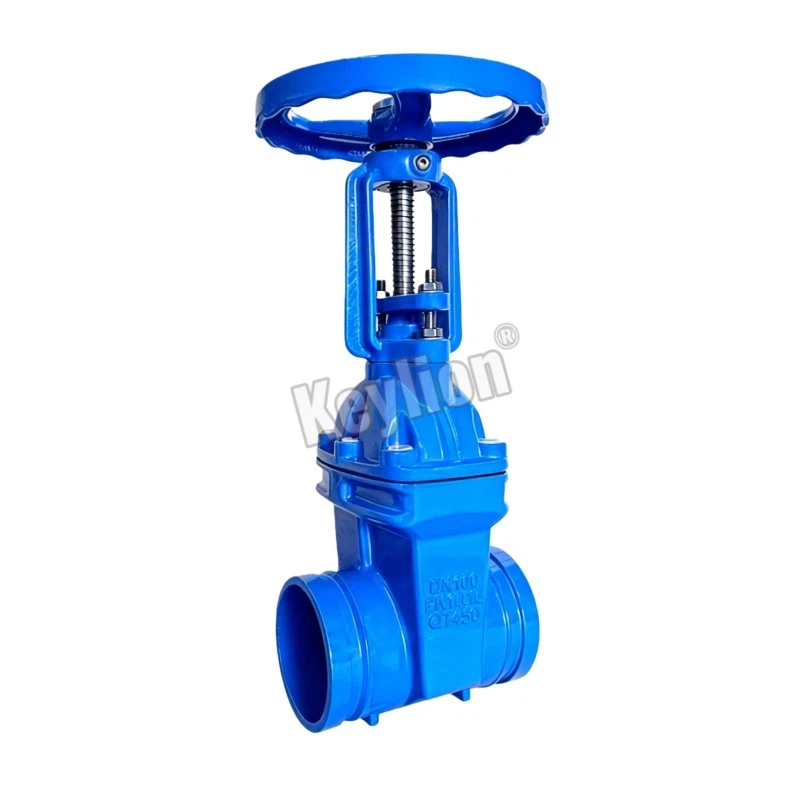
In the complex infrastructure of modern pipeline networks, the mechanical gate valve acts as the definitive "master switch." Its primary role is to provide a full-bore opening for maximum flow or a bubble-tight shut-off to isolate media. While highly efficient for starting or stopping flow, it is strictly designed for on/off service and is not intended for throttling or regulating flow (partial opening/closing).
Technologically, the modern mechanical gate valve has evolved significantly. Unlike traditional metal-seated valves that were prone to corrosion and leakage, today's valves feature a resilient seated design. This involves a wedge fully encapsulated in high-grade rubber (EPDM or NBR). Combined with a fusion-bonded epoxy (FBE) coating, these valves offer zero-leakage performance, exceptional rust resistance, and a much longer service life.


Municipal Water Supply and Potable Water Networks
This is the most common "stage" for the Water Gate Valve with Cap Nut. Because the internal epoxy coatings and rubber materials meet strict hygiene standards for drinking water, these valves are indispensable in city water mains and residential distribution systems. They serve as sectional control gates, allowing operators to isolate specific pipe segments for repairs without shutting down the entire city grid. Furthermore, they are installed at the inlets and outlets of pumping stations and water treatment plants to ensure maintenance teams can safely service equipment.
Building Fire Protection Systems
Reliability is non-negotiable in fire safety. In shopping malls, high-rise office buildings, and industrial warehouses, mechanical gate valves are a core component of the fire protection network. They control the water supply for fire tanks, pump rooms, and the complex grid of sprinklers and hydrants on each floor. Their primary use here is maintenance isolation; if a specific sprinkler head or pipe section is damaged, closing the valve isolates the affected zone while keeping the rest of the building protected.


Underground Municipal Engineering and Infrastructure
The design of the Gate Valve with Operating Cap (also referred to as a Gate Valve with Captop) highlights its specialized utility in buried environments. As a non-rising stem (NRS) valve, the stem does not move up or down during operation, saving vertical space. This makes it the premier choice as an Underground Gate Valve or Buried Gate Valve. These valves can be installed directly in the soil or within narrow valve chambers. A key advantage is surface operation: workers do not need to enter a confined manhole; instead, they use a long T-key wrench from the ground level to grip the square operating cap, making operations safe and efficient.
Industrial Cooling and HVAC Systems
In large-scale commercial buildings, mechanical gate valves are vital for central HVAC systems, controlling the circulation of chilled and cooling water in main risers. Similarly, in factories, they are used to manage general industrial water and process cooling loops, providing a dependable means of flow isolation for manufacturing equipment.

Learn more about Mechanical Gate Valve