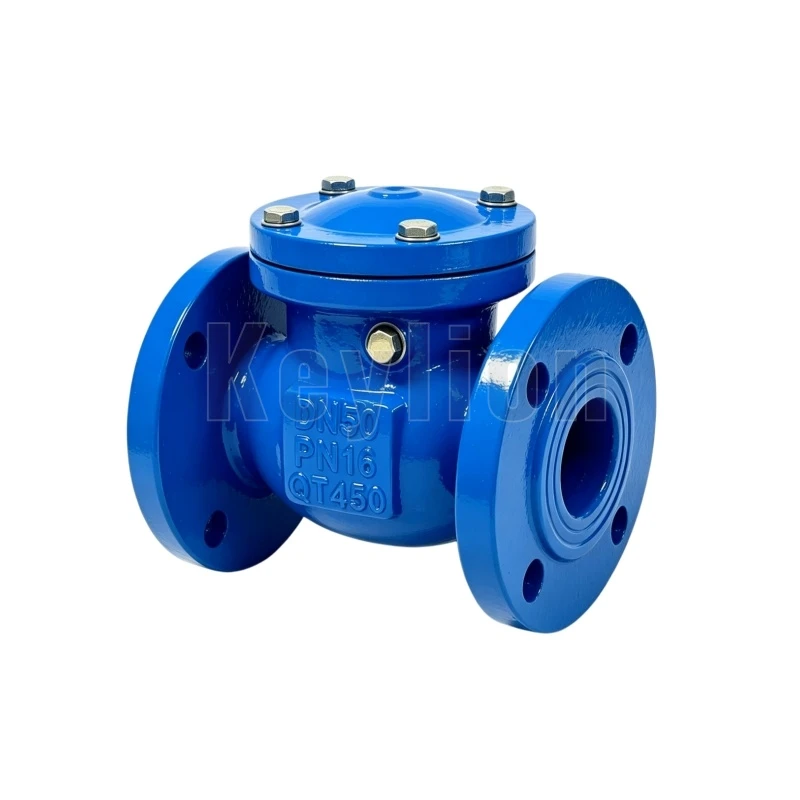
Most guys in the field know the sound of a pump shutting down followed by a violent "thump" that rattles the entire room. That's water hammer, and it is a notorious pipe killer. I've seen it shake heavy-duty hangers loose and blow out gaskets in seconds. The issue is usually a standard swing check valve. It's just too slow. By the time the disc finally swings shut, the water has already reversed and gained speed. That collision creates a massive shockwave. This is exactly why we switch to a silent check valve. Often called a non-slam check valve, it doesn't wait for gravity or flow reversal to do the work. It stays ahead of the water, protecting your pumps, joints, and expensive instrumentation from the stress of sudden stops. If your mechanical room sounds like a construction site every time the motor cuts, this is the hardware you are missing.
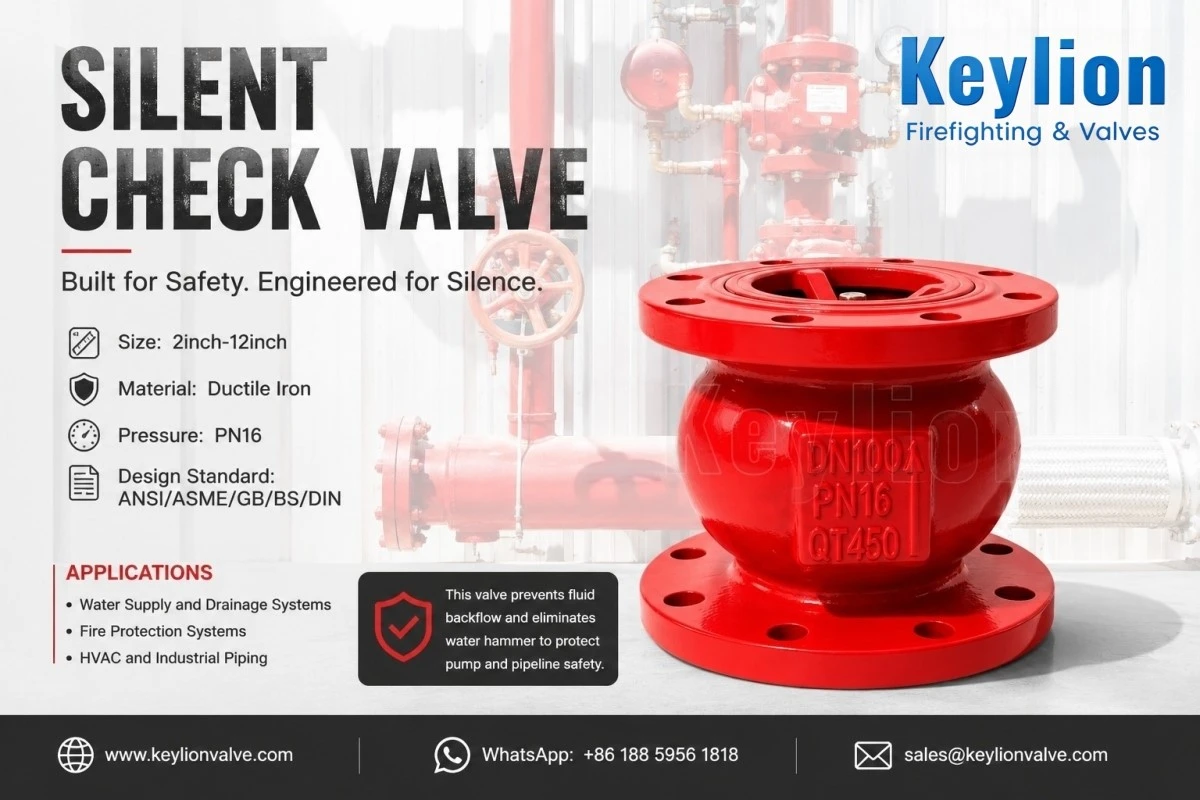
Look at the cutaway image. The secret to the silence is that stainless steel coil spring and the trident-style center guide. This ductile iron silent check valve is cast from QT450 for extra toughness against vibrations. As a PN16 silent check valve, it's built to handle 16 bars of pressure (about 232 PSI) without breaking a sweat. When the pump runs, flow pushes the disc open. The moment power is cut, the internal spring snaps the disc back onto the rubber seal before the water can reverse direction. Because the valve is already seated when the velocity hits zero, there is no slam and no noise. You bolting a flanged silent check valve onto a pump discharge or a high-lift riser gives you instant protection. The silent globe check valve body is intentionally wider than the pipe diameter, so you don't lose much pressure even with the internals in the way. It's a simple silent non return valve that keeps the system quiet and ensures your maintenance budget isn't wasted on fixing avoidable leaks.