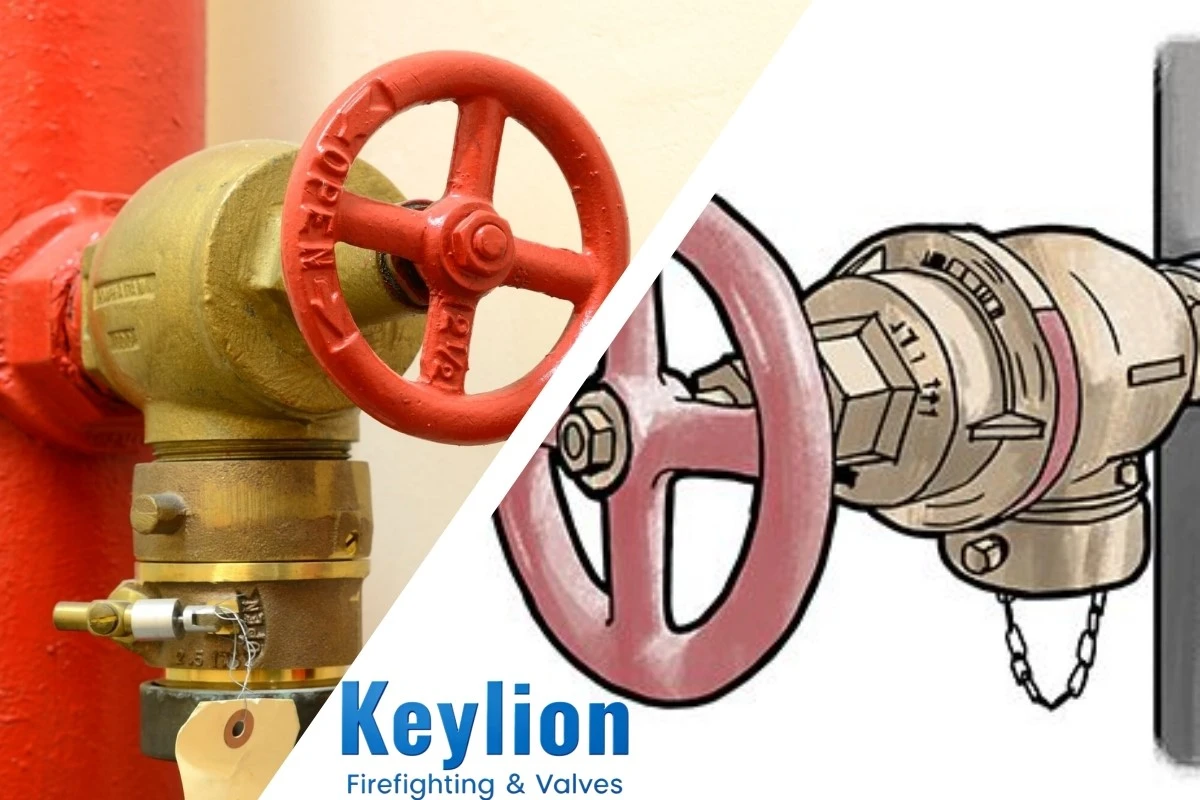
At its heart, a hose angle valve is a type of globe valve where the inlet (where water comes in) and the outlet (where the hose connects) are at a 90-degree angle to each other.
Think of it as a heavy-duty faucet for fire hoses. Its primary job is to control the flow of water from a building's main water pipes (known as standpipes) into a fire hose. Because the outlet is angled downward or to the side, it makes it much easier to connect a thick hose without it kinking or bending awkwardly against the wall.
How Does It Work?
The mechanism is pretty straightforward. Inside the valve, there is a "disc" or a plug. When you turn the handwheel on top:
Opening: The disc lifts up, clearing the path for water to rush through the 90-degree bend and out through the hose connection.
Closing: You spin the wheel the other way to press the disc back down, sealing off the water pressure.
Most of these valves are made from brass or bronze. Why? Because these materials are incredibly tough, they don't rust easily, and they can handle the high water pressure needed to fight fires.
Where Will You Find Them?
You won't usually find these in a typical house. They are designed for "Class I" or "Class II" fire standpipe systems found in:
High-rise buildings: On every floor landing in the stairwells.
Industrial Plants: Near hazardous areas or large machinery.
Hose Cabinets: Often paired with a fire hose rack assembly so a first responder or trained employee can grab the hose and start spraying immediately.
Why the 90-Degree Angle?
You might wonder why we don't just use a straight valve. The "angle" design is intentional for two big reasons:
Space Saving: It allows the valve to sit close to the wall or inside a shallow cabinet without the hose connection sticking out too far.
Better Flow: The 90-degree turn is built into the valve body itself. This means the water doesn't have to fight through a separate elbow joint, which helps maintain the strong water pressure needed to reach a fire.
Different Versions for Different Needs
While most angle valves look similar, there are two main "flavors":
Standard Hose Angle Valves: These just turn the water on and off. The pressure coming out is the same as the pressure in the pipes.
Pressure Regulating Valves: These are a bit smarter. In very tall buildings, the water pressure at the bottom floors is much higher than at the top. These valves have internal settings to "throttle" the pressure so the person holding the hose doesn't get knocked over by a dangerous surge of water.


Maintenance and Care
Since these valves might sit untouched for years, they need regular "check-ups." Fire safety codes usually require professionals to inspect them to make sure the handwheel turns smoothly, the seals aren't leaking, and the threads where the hose connects aren't damaged or clogged with dust.
Summary
A hose angle valve is more than just a piece of metal on a pipe; it's a critical safety tool. It's designed to be simple, reliable, and easy to use during an emergency. By providing a clear, 90-degree connection point for fire hoses, it ensures that when water is needed most, it can get to the fire quickly and without any mechanical hiccups.
Whether you are a building manager or just curious about the hardware around you, knowing how these valves work helps you appreciate the hidden systems that keep us safe every day.