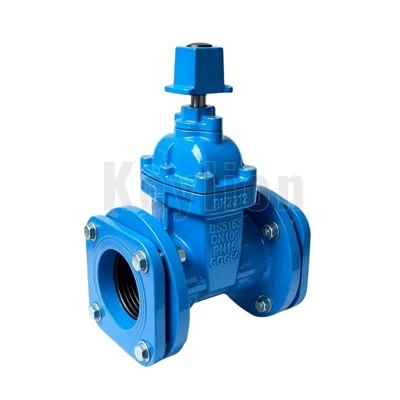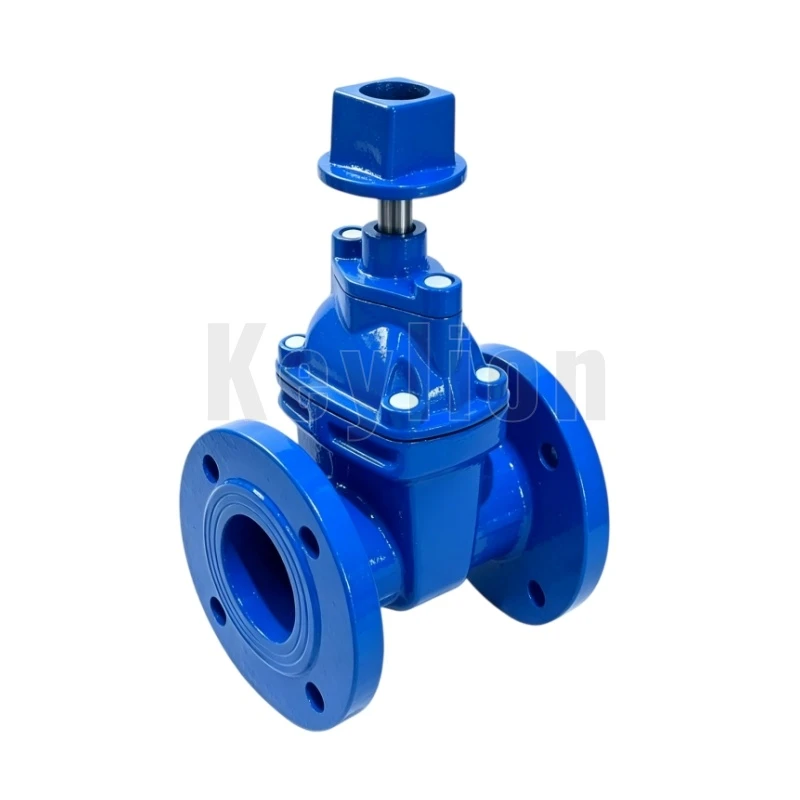
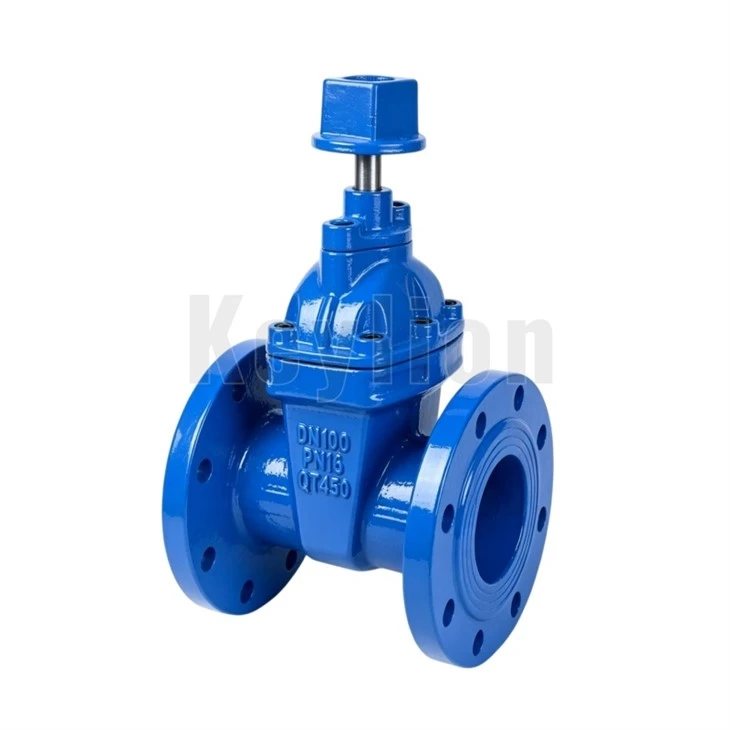
Flanged Underground Gate Valve
Keylion® Flanged Underground Gate Valve. Folks within this industry often refer to it as an NRS gate valve fitted with an operating nut or cap nut, or just a buried gate valve. It acts as the main isolation point for water infrastructure.
We designed this valve with a non‑rising stem mechanism. The rubber‑coated wedge inside travels up and down inside the valve body, and the stem does not lift during operation. This keeps its vertical footprint compact, so field engineers select this valve for underground pipelines with limited vertical room.
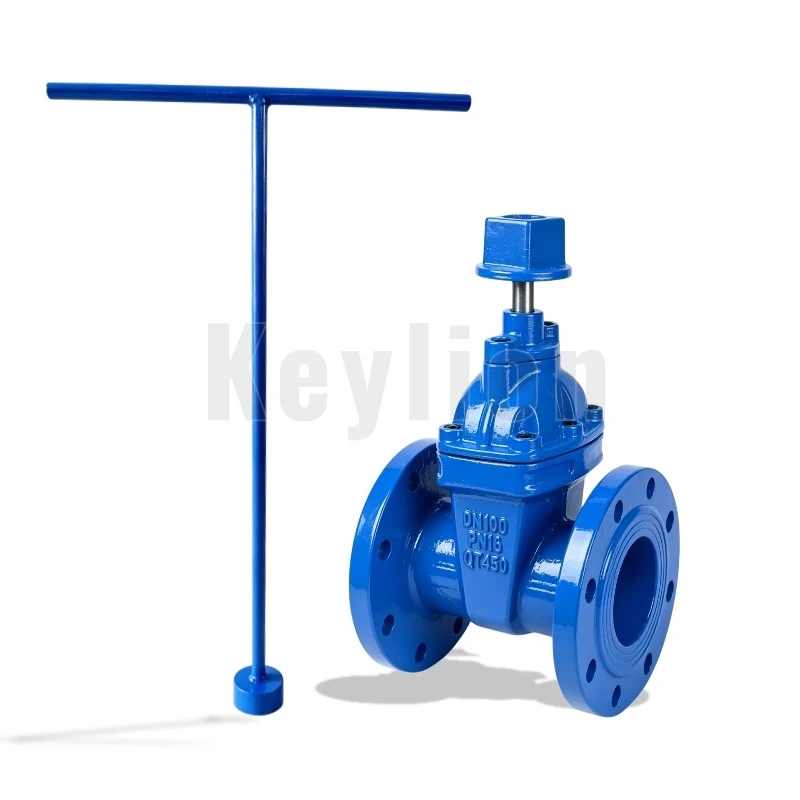
You'll commonly see these valves fitted to municipal water mains, irrigation loops and fire protection systems. Operators control the valve from ground level. They use a T‑key and long extension spindle that runs through a road‑level box.
Technical Specifications
| Parameter | Detail |
| Product Name | Flanged Underground Gate Valve |
| Brand | Keylion® |
| Application Type | Underground / Buried |
| Operation Type | Square Operating Nut (T-Key Compatible) |
| Medium | Potable Water, Sewage, Wastewater, Fire Protection Systems |
| Working Temperature | 0°C to +80°C |
FAQ
How do you operate an underground gate valve from the surface?
You don't need to dig up the road to shut off the water. Grab a T‑handle key, which most people in this trade call a T‑key, and lower it through the surface box. Fit its socket end onto the square operating nut, also referred to as the cap nut, on top of the valve stem. For deep trench installations, we often fit either telescopic or fixed extension spindles. This brings the operating nut right under the surface cover, letting your maintenance crew open or close the water line quickly.
Why do buried gate valves require fusion bonded epoxy (FBE) coating?
Soil is a harsh corrosive environment. Groundwater, minerals and ongoing electrochemical reactions will rapidly eat away bare ductile iron. We apply FBE coating at high temperatures, so epoxy resin fuses firmly onto the ductile iron and creates a thick, non‑porous protective barrier. This tough coating also stands up against scratches and chips while backfilling, a point where standard liquid paint coatings usually fail.
Can a flanged underground gate valve be used for throttling or regulating flow?
This valve cannot work for throttling or flow regulation. It is meant only for fully open or fully closed service. Stopping the wedge at a mid‑position to restrict water creates strong turbulence and vibration. That constant shaking can tear the EPDM rubber coating off the wedge or bend the internal stem, and the valve will no longer form a tight shutoff. Go with a dedicated globe or control valve if your project needs flow regulation.
What should I check if the valve is hard to turn after years of burial?
The valve body itself is usually fine. Grit and debris fall into the valve box and jam the square nut. Never apply heavy torque, or you could snap the stem. First clear out the surface box and confirm your extension spindle stays properly aligned. If sediment inside the pipe locks the wedge, slowly cycle the valve. Open and close it a little at a time, and moving water will flush sediment out of the seating area.
Hot Tags: flanged underground gate valve, China flanged underground gate valve manufacturers, suppliers, factory, full gate valve, gate valve seal, Gate Valve Underground, gated y valve, Grooved Y Strainer, PN16 Wafer Butterfly Valve