
In the complex ecosystem of fire protection and life safety, the mechanical components-pipes, pumps, and sprinklers-often receive the most attention. However, these systems are only effective if the water supply remains unobstructed. This is where the Tamper Switch, specifically the Valve Supervisory Switch, plays a pivotal role. It acts as the "security guard" of the fire suppression system, ensuring that the critical valves controlling water flow are never accidentally or maliciously closed.
1.What is a Tamper Switch?
A tamper switch is an electromechanical device designed to monitor the position of a valve handle or a control mechanism. In fire protection, its primary function is to provide "supervision." Unlike a flow switch, which reacts to the movement of water, a tamper switch reacts to the movement of the valve itself.
If a control valve is partially or fully closed, the tamper switch detects this change in position and sends an electronic signal to a fire alarm control panel (FACP) or a building management system. This ensures that facility managers are immediately alerted if the water supply to the sprinklers has been compromised.
2.The Core Anatomy of a Valve Supervisory Switch
A high-performance supervisory switch is designed to be rugged, weather-resistant, and highly sensitive to movement. Its typical construction includes:
The Actuator (The Trigger): A spring-loaded lever or rod that rests against the valve's moving parts (such as the stem of an Outside Screw and Yoke valve or the flag of a butterfly valve).
Micro-switches: Usually containing two sets of Single Pole Double Throw (SPDT) contacts. One set is typically wired to the fire alarm panel, while the other can be used for a local auxiliary buzzer or security system.
NEMA-Rated Enclosure: To withstand harsh environments-such as pump rooms, parking garages, or outdoor pits-the internal components are housed in a corrosion-resistant, weatherproof metal or polycarbonate casing.
Tamper-Resistant Screws: To prevent someone from disabling the switch itself, the housing is usually secured with specialized screws that require a unique tool to open.
3.Key Types of Supervisory Switches
Different valve designs require specific types of supervisory switches. Understanding these variations is essential for proper system design:
A. OS&Y (Outside Screw and Yoke) Switches
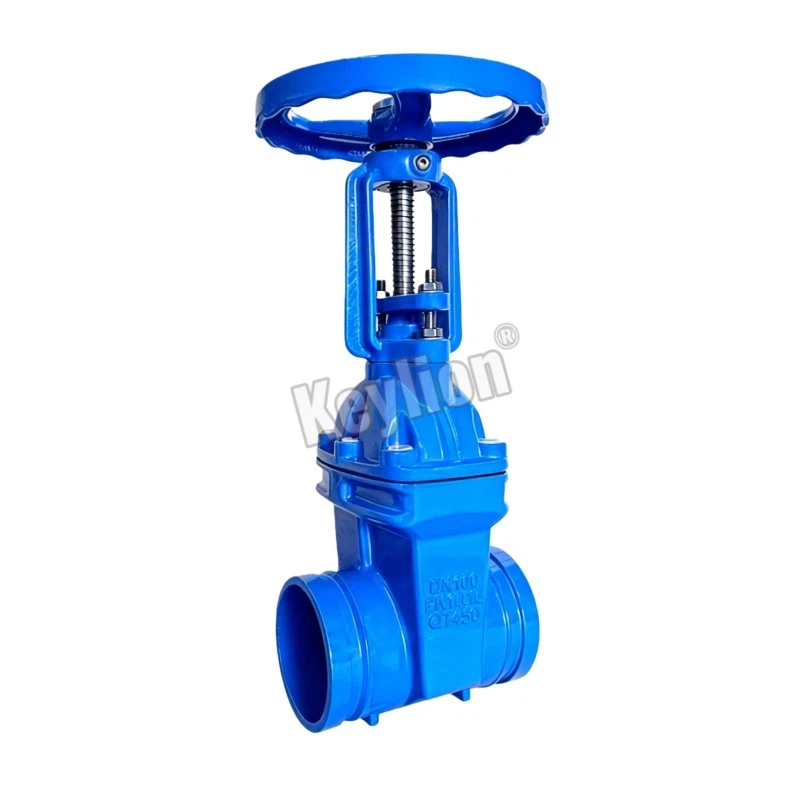
These are used on gate valves where the stem moves in and out as the valve is operated. The switch is mounted to the valve yoke, and a bracket holds the actuator against the threaded stem. When the valve is closed, the stem moves, allowing the actuator to trip the switch.
B. Butterfly Valve Switches
Many modern butterfly valves come with "built-in" supervisory switches. However, external switches can also be mounted to the gear operator. These detect the rotation of the internal disc or the movement of the external flag indicator.
C. PIV (Post Indicator Valve) Switches
Commonly found in outdoor yards, these valves control the main water supply from the street. The switch is mounted inside the PIV housing and monitors the target (the "Open/Shut" sign) to ensure the valve remains in the "Open" position.
4.Technical Specifications
For a supervisory switch to be considered "industrial grade," it must meet rigorous mechanical and electrical benchmarks:
■ Operating Temperature: Must function reliably from -40°C to 60°C (-40°F to 140°F), allowing for installation in unheated or extreme environments.
■ Signal Delay: Unlike flow switches, tamper switches usually trigger instantly. There is no "retard" mechanism because any unauthorized movement of a main water valve is considered an immediate emergency.
■ Contact Rating: Typically rated for 10 Amps at 125/250VAC, allowing them to interface with a variety of monitoring equipment.
■ Trip Point: Industry standards dictate that a switch must trigger within two full turns of the valve handle or when the valve flag has moved 1/5 of its total travel distance.
5.Why Supervision Matters: The Risks of "Closed Valves"
The most common reason for fire sprinkler failure during an actual fire is a closed valve. Maintenance crews often shut valves to perform repairs and forget to reopen them. Without a supervisory switch, this error might go unnoticed until a fire occurs and no water reaches the sprinkler heads.
By integrating Fire Valve Supervision into the building's monitoring system, the risk of human error is significantly mitigated. The moment a valve handle begins to turn, the fire alarm panel will signal a "Supervisory" condition-distinct from a "Fire Alarm"-notifying staff to investigate the valve's status.
6.Installation and Maintenance Best Practices
Proper installation is the only way to guarantee the switch will work when needed. Key considerations include:
■ Synchronicity: If a valve has two switches, they must be synchronized to trigger at the same time.
■ Conduit Protection: Wiring should be run through rigid or flexible metal conduit to prevent physical damage or accidental cutting.
■ Grounding: The metal housing of the switch must be properly grounded to the piping system to prevent electrical hazards.
■ Testing Protocol: According to standard Inspection, Testing, and Maintenance (ITM) guidelines, every supervisory switch should be tested semi- annually. This involves physically turning the valve handle and verifying that the signal is received at the control panel.
7.Beyond Fire Protection: Industrial Uses
While primarily used in fire safety, tamper switches are also vital in industrial fluid control. In chemical plants or water treatment facilities, certain valves must remain in a specific state (open or closed) to maintain process stability or prevent environmental spills. Using a supervisory switch provides a low-cost, high-reliability method for remote monitoring.
Conclusion
The tamper switch is the silent backbone of fire system integrity. It ensures that the millions of dollars invested in pumps, pipes, and sprinklers are not rendered useless by a single turned handle. When selecting a valve supervisory switch, engineers should prioritize weatherproofing, dual-contact versatility, and ease of mounting to ensure long-term system reliability.