How Silent Check Valves Work in Vertical Pipe Runs
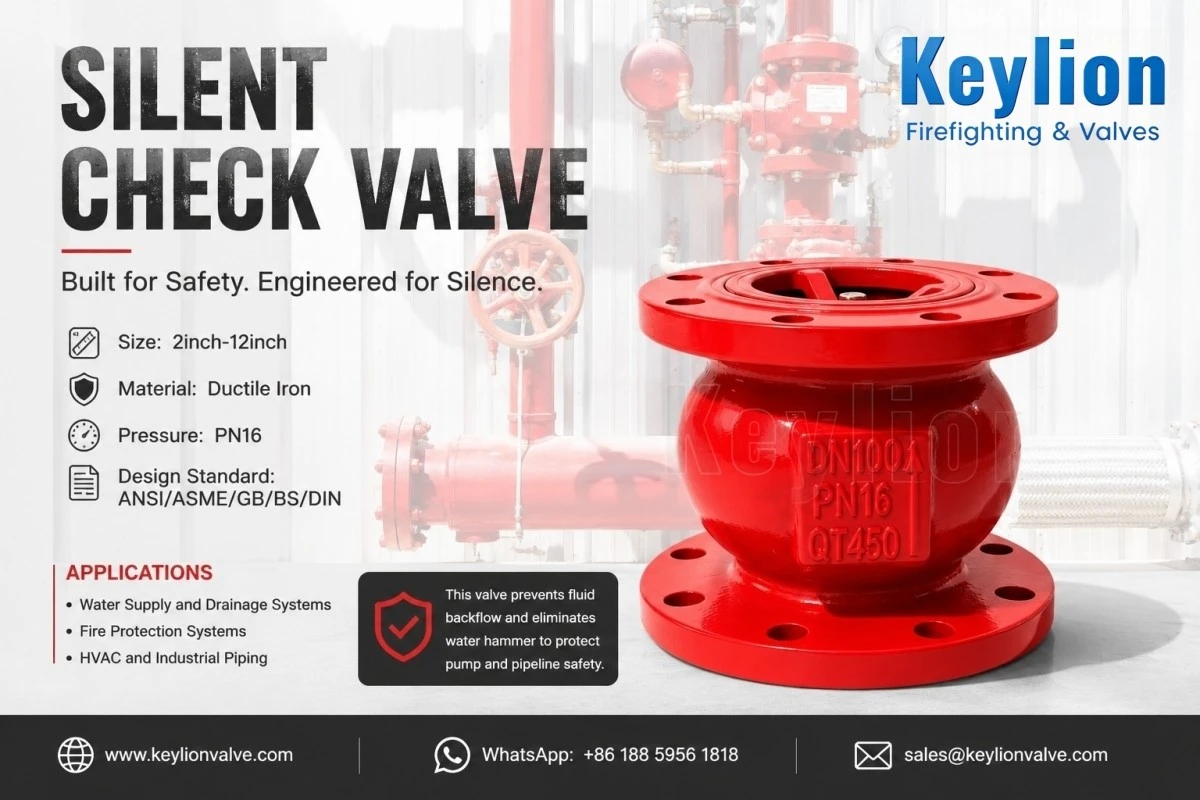
Unlike traditional swing check valves that rely heavily on gravity to drop the clapper back onto the valve seat, a silent check valve(frequently searched as a spring-assisted check valveor non-slam check valve) uses an internal stainless steel spring.
When the water pump turns on, the fluid pressure overcomes the spring tension, pushing the disc open. The moment the pump stops, the internal spring instantly snaps the valve disc shut before the column of water has a chance to reverse its flow direction. Because it achieves closure before the water travels backward, it completely eliminates the violent slamming noise and pressure spikes known as water hammer
Since the internal spring controls the entire closing action, gravity plays a minimal role. This mechanical setup makes these non-slam options highly adaptable for both horizontal and vertical lines.
Ductile Iron
Built with robust QT450 iron to withstand high pressure shock.
Spring Assisted
Internal spring closes disc instantly to prevent violent water hammer.
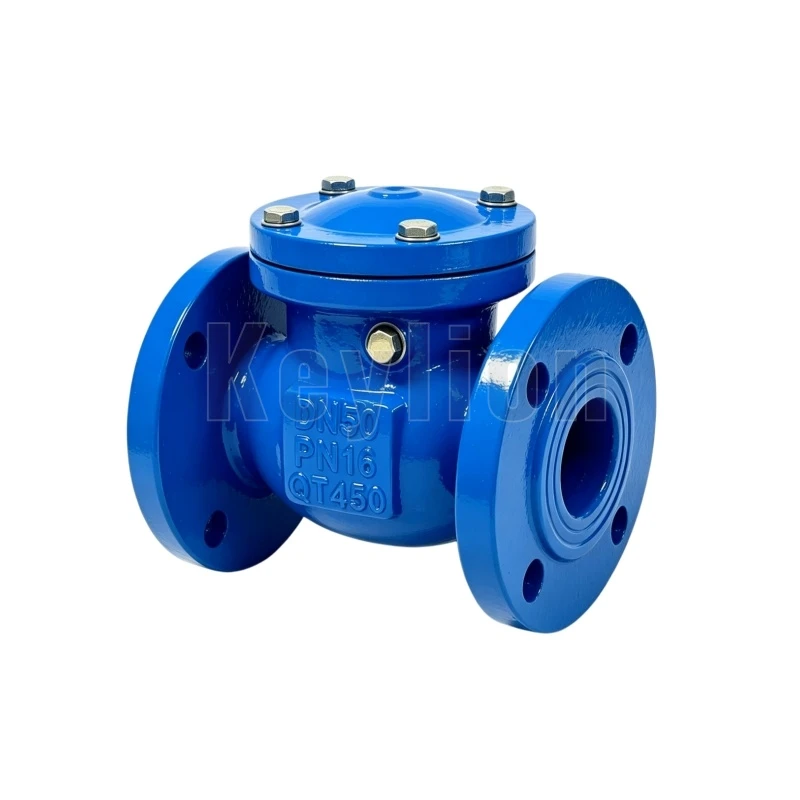
PN16 Flanged
Heavy duty flange design ensures leak proof vertical pipeline connection.
Non Slam
Silent closure mechanics completely eliminate pipeline noise and line chatter.
flow direction
Vertical Upflow Line (Highly Recommended)
This is the standard, safest, and most common way to install a flanged non-slam check valvevertically.
The Mechanics: The liquid pumps upward, pushing against the spring to open the valve flow path.
The Benefit: When the pump cuts out, both the spring tension and the natural pull of gravity work together to snap the valve shut.
Applications: This setup is ideal for high-rise building water supply lines, deep well submersible pumps, and industrial sump pump systems.
Vertical Downflow Line (Proceed with Extreme Caution)
Installing a check valve where the liquid flows downward is tricky and generally discouraged by pipeline designers.
The Risk: If the fluid flows down, gravity constantly pulls the valve disc open.
The Solution: The internal spring must be strong enough to overcome both the heavy fluid weight and gravity to achieve a tight seal.
Purchasing Tip: If your piping layout forces you into a downflow setup, you must consult your valve manufacturer or supplier. You will need a custom-rated spring with a specific cracking pressure to ensure the valve doesn't leak or stay stuck open.