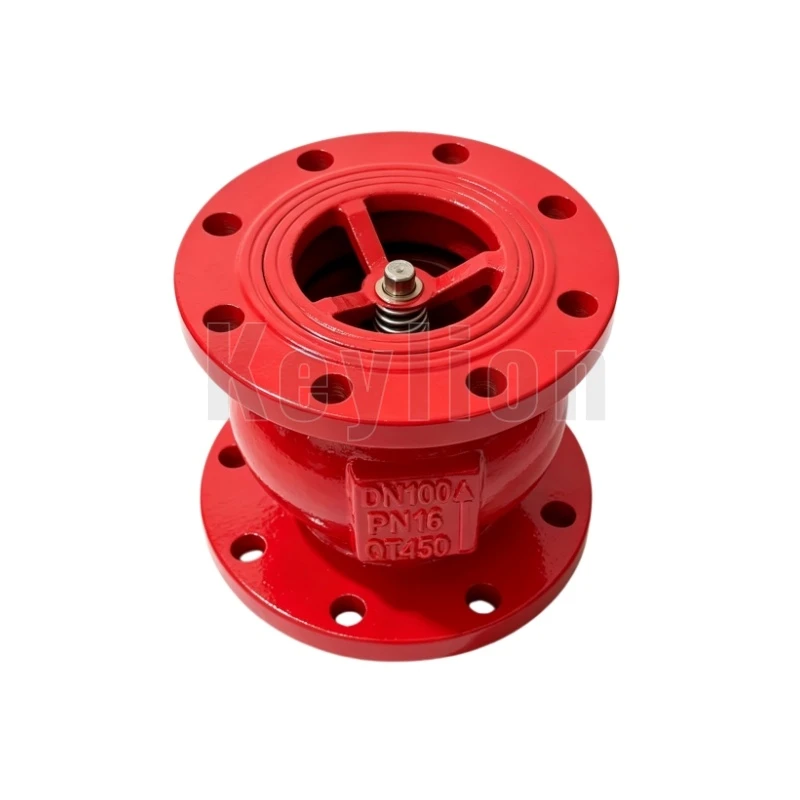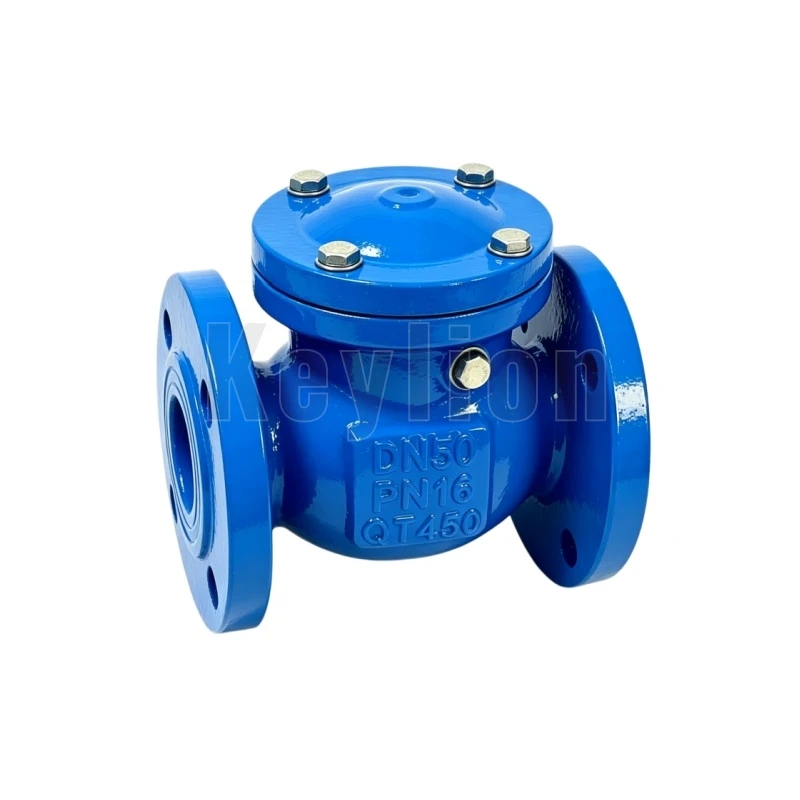
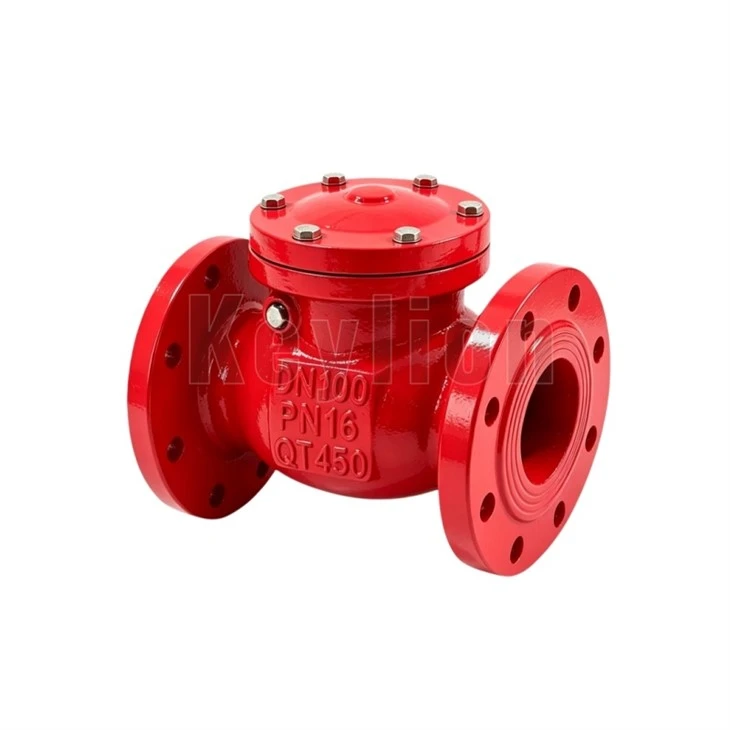

Flanged Swing Check Valve
Keylion® Flanged Swing Check Valve, also known as a non-return valve or clapper valve, is a crucial component for preventing media reversal in pumping systems. It operates using a weighted disc that swings freely on a hinge pin, opening under forward pressure and closing via gravity when the pump stops. This simple yet effective design protects pumps and upstream piping from sudden water hammer and backflow damage. These valves are widely used in municipal water lines, industrial sewage systems, and commercial fire protection setups. Their full-bore internal path ensures minimal head loss, making them a preferred option for energy-conscious engineers.
Technical Specifications
| Product Name | Flanged Swing Check Valve |
| Brand | Keylion®/OEM |
| Body Material | Ductile Iron QT450 / GGG50 |
| Nominal Diameter | DN50 - DN300 (Custom sizes available) |
| Pressure Rating | PN10 / PN16 |
| Flange Standard | ANSI/ASME/GB/BS/DIN |
| Working Temperature | -10°C to 80°C (EPDM Seat) |
| Applicable Media | Water, Neutral Liquids, Sewage |
Practical Installation & Maintenance Guide
From an operational standpoint, the most common mistake we see is ignoring the flow arrow cast on the valve body. Always ensure the arrow points in the direction of intended flow. For horizontal installations, keep the bonnet facing straight up. If you are mounting this valve vertically, the flow must move upward to allow gravity to seat the disc properly when the pump shuts off.
We pack these in reinforced plywood cases to ensure the epoxy finish and flange faces don't get chipped during sea freight handling. For maintenance, the top-entry bolted bonnet is a lifesaver. You can inspect the hinge pin and clear out any debris without cutting the valve out of the line. We recommend checking the seat for scale buildup every two years, especially in wastewater applications, to maintain a tight seal.

FAQ
Q: What else do people call this Flanged Swing Check Valve in the industry?
A: In my daily emails with clients, I see a lot of different names. In the UK and Middle East, they mostly call it a Flanged Non-Return Valve or just an NRV. In the US or Philippines, engineers might call it a Clapper Valve because of the sound the disc makes when it shuts. Sometimes it's just called a Gravity Check Valve since it doesn't use a spring to close. Whatever the name, the function is the same: stopping backflow.
Q: What is the real purpose of the bolted top cover?
A: The bolted bonnet design is all about top-entry maintenance. If your pipeline gets clogged with rags or heavy sediment, you don't want to unbolt the whole valve from the pipe-that's a nightmare. With the bolted cover, you just pull the top bolts, lift the bonnet, and you can reach right into the seat to clear debris or swap out the hinge pin bushings. It saves hours of labor during routine safety inspections.
Q: Is it installed above ground or underground, and where exactly does it go?
A: You'll find it in both spots. For above-ground use, it's usually in the fire pump room or a mechanical basement. For underground installs, it sits in a concrete meter pit or a valve vault to keep it accessible. Regarding the position, you almost always put it on the discharge side of the pump. It goes right after the pump but before the main gate valve. This way, when the pump stops, the valve slams shut and prevents the entire water column from crashing back into the pump impellers.
Hot Tags: flanged swing check valve, China flanged swing check valve manufacturers, suppliers, factory, check air valve, check valve strainer, flanged check valve, Flanged Silent Check Valve, low resistance check valve, small one way valve