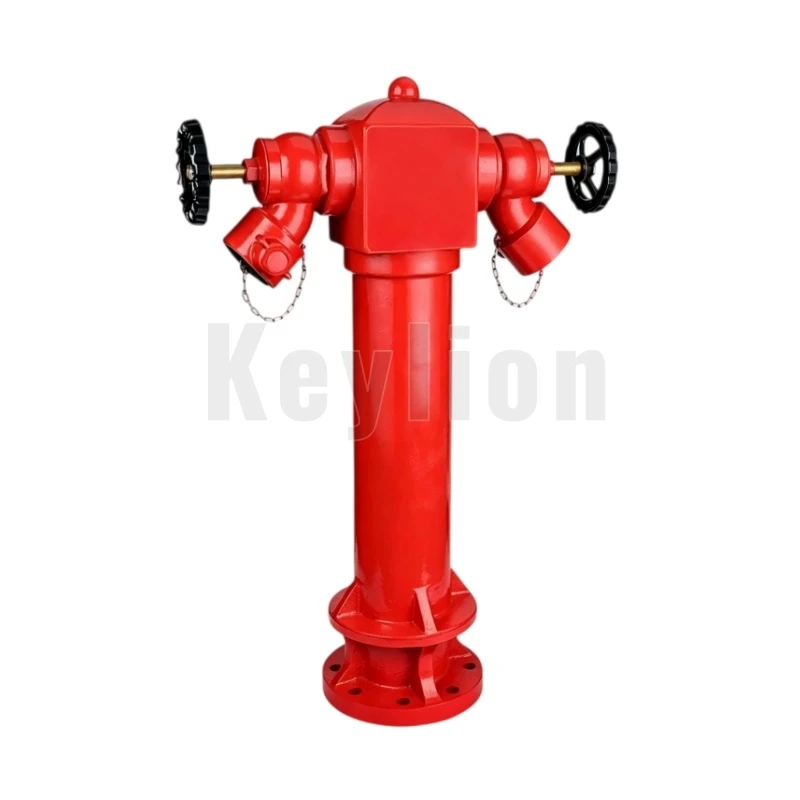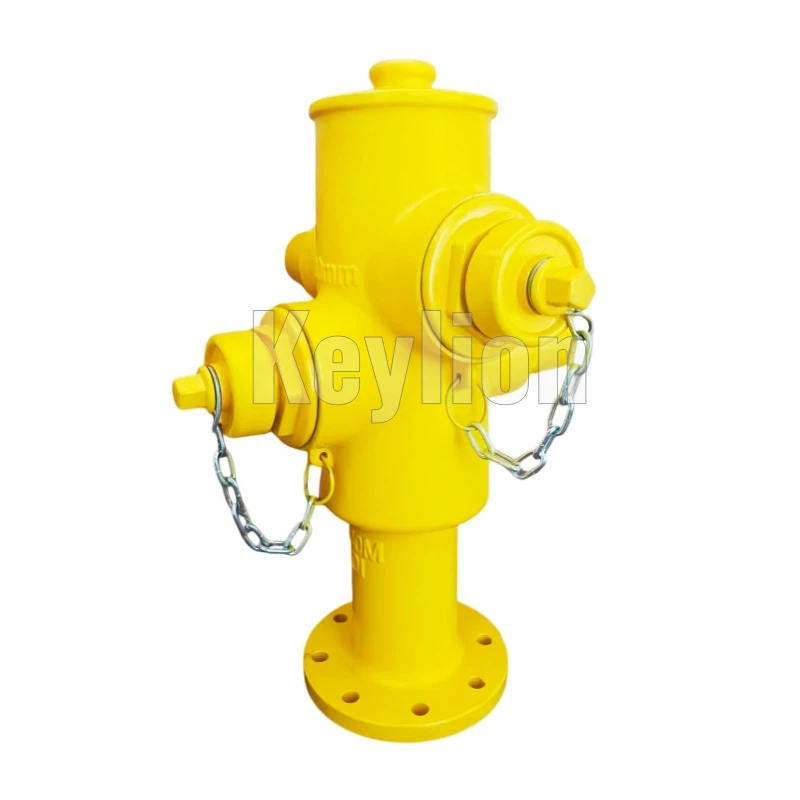


Red And Yellow Fire Hydrants
Keylion® red and yellow fire hydrant is also widely called a two‑way wet barrel pillar hydrant following British Standard. It serves as the primary connection point to hook up fire hoses on site. If you are comparing it with dry barrel models, here is the key difference. Water fills the hydrant body all the way to outlets for this wet type, and you get immediate water pressure as soon as you turn its handwheel.
We often supply this hydrant for city roads and factory boundary installations. It fits locations that do not see freezing weather, works as a dependable municipal water outlet, and lets fire truck booster pumps connect quickly in an emergency. Every unit keeps constant pressure round the clock, always on standby.
Technical Specifications
| Parameter | Details |
| Product Name | Red And Yellow Fire Hydrants |
| Design Standard | BS 750 |
| Body Material | Ductile Iron |
| Landing Valve Material | Ductile Iron / Aluminium / Brass |
| Inlet Size & Type | 4" (DN100) Flanged End |
| Outlet Size & Type | 2 × 2.5" (65mm) |
| Working Pressure | 16 Bar (232 PSI) |
| Test Pressure | 24 Bar (348 PSI) |
| Working Temperature | -10°C to +80°C |
Key Design Benefits
Dual Independent Outlets Keylion® two‑way outlet layout brings real convenience on site. With dual ports, you do not need extra splitters during fire response. Each outlet comes with an independent handwheel. One firefighter can start water flow for the first hose while another connects the second line, cutting precious response time at the early phase of fire.
Wet Barrel Logic As a wet barrel hydrant, water stays inside the pillar all the way to the valve seat. No waiting time at all. Full pressure arrives right after you turn the handwheel. It performs reliably in warm climates without freeze risk inside the body, which makes it a popular pick for tropical area projects.
Pillar Design We provide this pillar hydrant for sites requiring high visibility. Its waist‑high structure is easier to locate and operate compared with underground hydrant pits. Installed in busy parking lots or logistics warehouses, the striking red or yellow coating lets staff and emergency crews quickly find this water source from far away.

Questions Our Clients Often Ask
What do hydrant paint colours indicate on site?
In practical field use, red usually marks standard municipal water supply for fire brigade response. Yellow, on the other hand, refers to private pipelines or non‑potable water sources within factory premises and large estates. These bold paint colours are designed for high visibility. Emergency crews can easily locate the water outlet, even under poor lighting or bad weather conditions.
How to operate a 2-way wet barrel fire hydrant?
It is pretty straightforward out in the field. First, take off the protective caps from the outlets. Fit your fire hose coupling onto the BS 336 female port until you hear a firm click, which tells you it locks securely. Once everything is connected, slowly turn the top handwheel anticlockwise to open the internal valve. Water flows immediately, since the hydrant barrel remains full and pressurized non‑stop.
What is the difference between a 2-way and 3-way pillar fire hydrant?
Our 2‑way pillar hydrant has two side outlets. This is the widely adopted option for commercial buildings and residential zones. A 3‑way pillar adds one larger central port, commonly called a pumper outlet, to deliver massive water flow. Project planners often specify the 3‑way model for high‑risk industrial areas or city centres, where fire truck pumps need huge water supply at once.
Pillar fire hydrant vs underground fire hydrant: which to choose?
Pillar hydrants shine for quick access and clear visibility. Your team can walk right up and attach the fire hose without extra tools. Underground hydrants help keep pavements unblocked and prevent vehicle impact damage. The downside? You will need a separate standpipe and special key to get water out. From our project experience, most buyers for industrial yards and large sites go with pillar hydrants, as site staff can operate them with little training.
Hot Tags: red and yellow fire hydrants, China red and yellow fire hydrants manufacturers, suppliers, factory, Wet Barrel Fire Hydrants, Hydrant DN100, Fire Hydrant in The Philippines, fire hose valves, Fire Hydrant Angle Valve, hydrant valve 2 5 inch