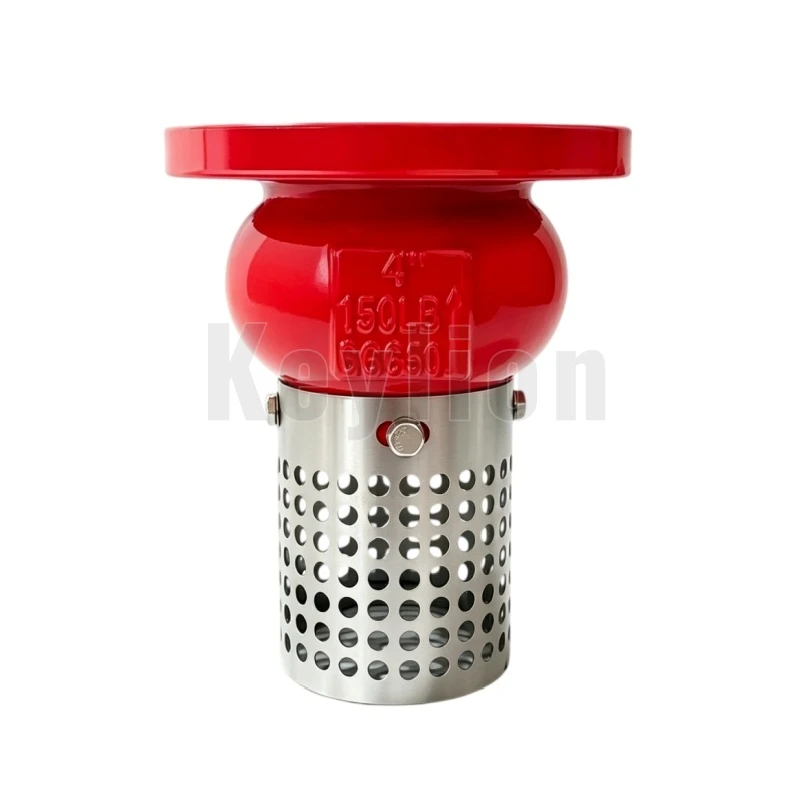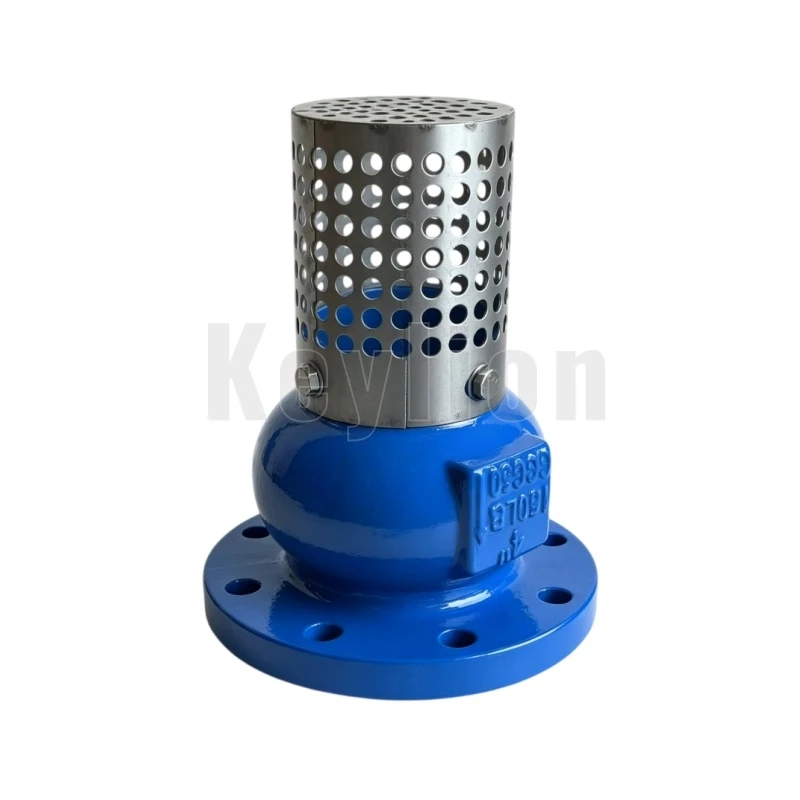
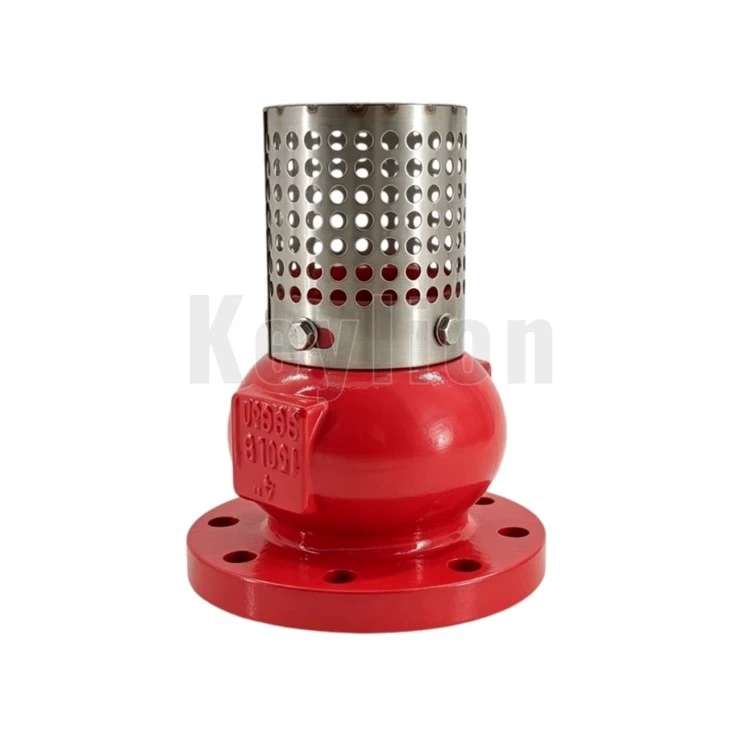
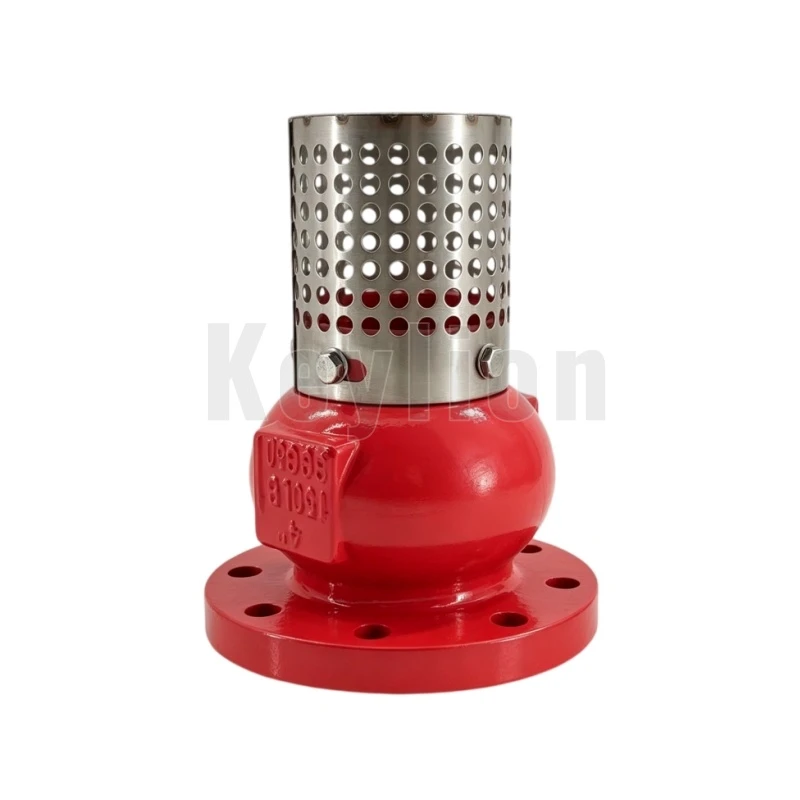
Foot Valve with Strainer
Keylion® Foot valve with strainer, commonly known among site engineers as a bottom valve or suction check valve, acts as a specialized non-return valve installed at the very end of a pump's intake line. The unit works on a simple pressure differential principle: it opens during the pump's suction stroke and closes automatically via spring or gravity once the pump shuts off. This operation keeps the entire suction column filled with liquid, eliminating the need for repeated priming. You will see these valves widely used in irrigation networks, industrial cooling systems, and municipal water extraction where keeping a constant prime is mandatory for operational efficiency.
Products Description
| Product Name | Flanged Foot Valve with Strainer (Bottom Valve) |
| Brand | Keylion® |
| Size Range | DN50 - DN600 (2" - 24") |
| Nominal Pressure | 300PSI/150LB/PN16 |
| Body Material | Ductile Iron |
| Strainer Material | Stainless Steel 304 / 316 |
| Applicable Media | Water, Sewage, Neutral Liquids |
| Working Temperature | 0°C to 80°C |
| Coating | Fusion Bonded Epoxy |
FAQ
Q: What is the difference between a foot valve and a check valve?
A: Think of a foot valve with strainer as a specialized check valve designed specifically for the very bottom of your suction line. While both prevent backflow, a standard check valve is built for inline use. The foot valve includes a heavy-duty mesh to stop debris and is engineered to handle the constant immersion at the intake point, keeping the pump primed from the start.
Q: How deep should a foot valve be submerged in water?
A: Depth is critical to avoid "vortexing"-that mini-tornado effect that sucks air into your system. We generally recommend keeping the strainer at least two to three times the suction pipe diameter below the lowest water level. Also, try to keep it about a foot above the floor of the tank or riverbed so it doesn't vacuum up mud and silt.
Q: What causes water hammer in a flanged foot valve system?
A: Water hammer usually happens right when the pump stops and the entire water column slams back against the valve disc. In a flanged foot valve setup, if the disc doesn't seat fast enough or if the return flow is too aggressive, that sudden stop sends a shockwave through the pipes. You might notice the pipes rattling or hear a loud "thud"-this is often solved by choosing a spring-assisted disc that closes before the water starts moving backward.
Q: Why is my pump foot valve leaking backwards?
A: If you find your pump losing prime, it's almost always a sealing issue at the bottom. Even with a stainless cage, a tiny piece of gravel or a bit of weed can get caught between the disc and the seat, preventing a watertight seal. Another culprit is scale buildup on the ductile iron body over years of service, which creates a rough surface that lets water bleed back into the source.
Hot Tags: foot valve with strainer, China foot valve with strainer manufacturers, suppliers, factory, Ductile Iron Foot Valve, foot water valve, hydraulic foot control valve, water pump with foot valve, water well foot valve, water well pump foot valve